

 Facebook
 X
 Pinterest
 Copy Link
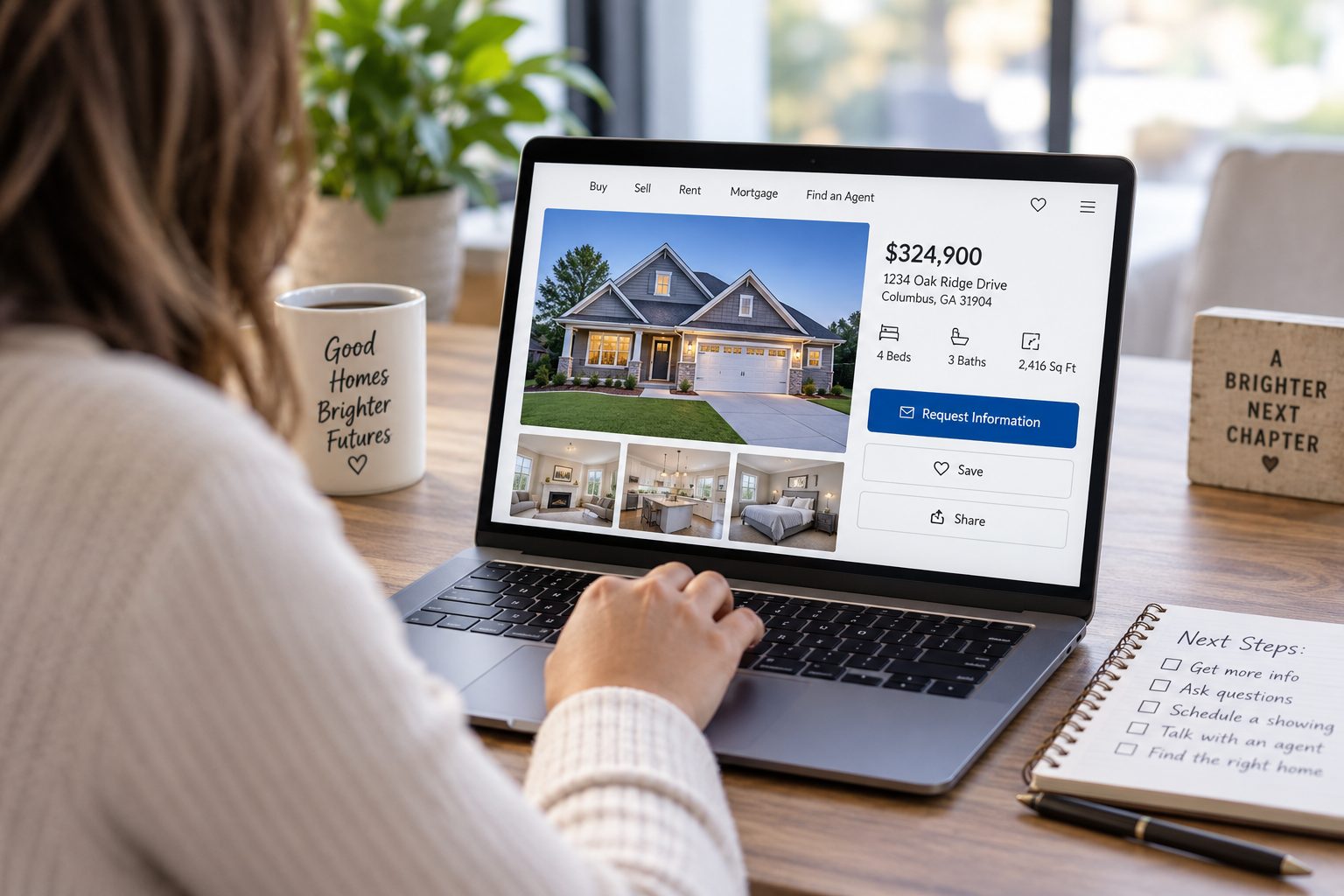
You found a house online that caught your attention, so you clicked “Request Information.” It may feel like a simple request for details, but behind that click, several things can happen.
Depending on the website, your inquiry may go directly to the listing agent, to another participating real estate agent, or through a lead-routing or referral program. Understanding what happens after you request information on a house can help you know who you are speaking with, why they are contacting you, and what questions to ask before moving forward.
That Button Does Not Always Mean “Contact the Listing Agent”
One of the biggest misunderstandings in online home searching is assuming that the agent who contacts you after you click a button is automatically the agent who listed the property.
Sometimes that may be the case.
Other times, the website may connect you with a real estate professional who participates in that platform’s advertising, lead-generation, or referral program.
The exact process depends on the website and the program involved.
That distinction matters because the agent contacting you may know the property, may be able to schedule a showing, and may be able to represent you as a buyer—but they may not represent the seller or be the listing agent for that particular home.
What Happens After You Request Information on a House?
After you request information on a house, your inquiry may move through several different systems depending on the website or platform.
Once you submit your name, phone number, email address, or other information, your inquiry may move through several steps.
1. Your Information Is Captured
The website records your inquiry and the property that interested you.
Depending on the platform, that information may be sent directly to an agent, routed through a call center or lead-management system, or distributed according to the platform’s participating-agent program.
2. An Agent May Contact You Quickly
If you receive a phone call or text shortly after submitting the request, that is often intentional.
Online real estate inquiries can be highly time-sensitive. A buyer may be looking at several properties at once, and the property they are interested in may already have showing activity or competing interest.
That is one reason agents and real estate platforms often place significant emphasis on responding quickly.
3. The Agent May Ask You Qualifying Questions
You may be asked questions such as:
- Are you already working with a real estate agent?
- Are you currently pre-approved for financing, or will you be paying cash?
- When are you hoping to move?
- Are you relocating to the area?
- Is this the only property you are interested in?
- What price range are you considering?
- Would you prefer to communicate by phone or text?
Those questions are not necessarily meant to create pressure. They help the agent understand where you are in the buying process and what type of assistance you may actually need.
For example, someone PCSing to Fort Benning may need very different guidance than someone who already lives in Columbus and is simply moving across town.
Some Online Leads Are Part of Referral Programs
This is one of the parts of the real estate business consumers rarely see.
Some real estate websites operate programs that connect consumers with participating agents and brokers. In certain programs, the agent or brokerage does not necessarily pay for the consumer inquiry upfront. Instead, a referral fee may become due if the transaction ultimately closes.
For example, Realtor.com currently describes its ReadyConnect Concierge program as providing participating real estate professionals with pre-screened leads and charging a referral fee on closed transactions.
That does not mean every Realtor.com inquiry works that way, and it does not mean every website uses the same business model.
Real estate websites use several business models. Some companies sell advertising or individual leads, while others use referral-fee arrangements. A platform may also connect consumers directly with listing agents or combine several of these approaches.
The important point for consumers is simple: the process behind the button may be more complicated than the button itself suggests.
Does a Referral Fee Increase the Price of the House?
Not automatically.
The existence of a referral arrangement between a real estate professional and a lead provider does not, by itself, change the seller’s asking price for the property.
It is generally a business arrangement involving the real estate professional, brokerage, and referring company.
However, buyers should still understand how the professional representing them is compensated.
Real estate compensation is not set by law and is negotiable. Written buyer agreements are intended to clearly explain the services the agent will provide and how compensation will be handled.
Transparency matters.
Did You Hire an Agent Just by Clicking the Button?
Generally, simply requesting information about a property does not by itself mean you have established full buyer representation with the agent who contacts you.
A conversation is not the same thing as a representation agreement.
For many REALTORS® working with buyers, a written buyer agreement must be established before the agent tours a home with the buyer. The agreement should explain important terms such as the services being provided, the length of the agreement, and how the real estate professional will be compensated.
You should read that agreement carefully and ask questions before signing it.
What If You Already Have a Real Estate Agent?
Tell the person who contacts you immediately.
If you are already represented by another real estate professional, that is important information.
Instead of repeatedly clicking inquiry buttons to arrange showings yourself, your agent can usually research the property, communicate with the listing side, obtain available documents, schedule the showing, and help determine whether the property actually fits what you are looking for.
Your agent can also help identify issues that may not be obvious from the photos or short description on a consumer real estate website.
What Should You Ask the Agent Who Contacts You?
There is nothing wrong with asking direct questions.
Consider asking:
“Are you the listing agent for this property?”
If not:
“How were you connected with my inquiry?”
You can also ask:
“Would you be representing me as the buyer?”
“Is there anything I would need to sign before you show me the property?”
“How would your brokerage be compensated if I purchase a home?”
“Are there any agreements I should understand before we move forward?”
A professional real estate agent should be comfortable explaining the process.
Why This Matters More Than Most Buyers Realize
The internet has made finding homes incredibly easy.
Understanding the real estate process behind those homes is another matter.
Consumers can now browse thousands of listings, estimate mortgage payments, view school information, explore neighborhoods, and request property information from a phone.
But the moment you move from looking at houses to actually trying to buy one, there are additional considerations:
- Representation
- Financing
- Property condition
- Inspections
- Negotiations
- Earnest money
- Contingencies
- Appraisal
- Title work
- Closing costs
- Agent compensation
- Contract deadlines
That is where having someone explain the process—not simply open a door—becomes important.
A Better Way to Request Information on a House
If you find a property online and want to request information on a house, doing so is perfectly reasonable.
Just understand what may happen next.
Ask who you are speaking with.
Ask whether they are the listing agent.
Tell them if you are already represented.
Ask how representation works.
Ask what you would be signing.
And most importantly, choose the real estate professional you want to work with based on their knowledge, communication, experience, and ability to protect your interests—not simply because they were the first person connected to an internet inquiry.
Behind the Real Estate Transaction
Most consumers see the house, the showing, the offer, and eventually the closing table.
There is an entire system operating behind those moments.
Behind the Real Estate Transaction is my Wednesday series explaining those systems in plain language so buyers and sellers can better understand what is happening, why it matters, and what questions they should be asking.
If you are buying a home in Columbus, Georgia; Phenix City, Alabama; Fort Benning; Harris County; Russell County; Lee County; or the surrounding area, I am always willing to explain the process before you make a decision.
Ask about the homebuying process
Casey Cornelius, REALTOR®
Coldwell Banker Kennon & Parker
Columbus, GA | Phenix City, AL | Fort Benning Area
Phone: 910-527-3714
Email: casey.cornelius@kpdd.com
